
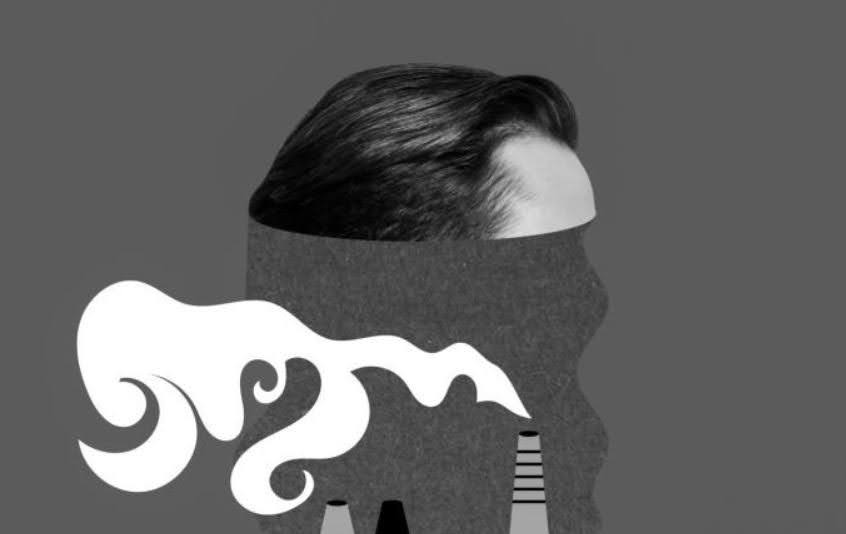
The people who often appear the saddest on the surface, namely artists, musicians, and writers, are not necessarily suffering more than everyone else. Instead, they may actually be among the few who fully integrate what suffering does to them.
Most people choose to, and default to, simply suppressing it. It's the most common, accepted, almost celebrated mechanism of survival. And it's the only thing most people know to do with their pain.
But what it doesn't allow, is to experience the meaning of it to its fullest. To integrate the way pain changes you. To accept and to grow into the person it made you. To grieve something that mattered, the way it deserves.
Keep moving.
Stay composed.
Don’t dwell.
Sometimes that works.
Other times, whatever is left unresolved returns in recognisable yet dysfunctional forms:
Addiction.
Disconnection.
Numbness.
People search for meaning and relief everywhere. In music. In films. In books. Finding echoes of themselves in strangers articulating emotions they struggle to define. There's a very real comfort in recognising your own interior life reflected back at you through art. It moves you through a familiar lived-in experience. A form you can understand. A language you can witness and process without the cost of exposure.
And the people behind that language are often the same ones society labels as melancholic, dramatic, even excessive.
But isn't it possible that the cultural trope of the “suffering artist” has always been slightly misunderstood? It is not necessarily that artists suffer more intensely than everyone else, that their lives are sadder or worse, or that they like to be sad. They may simply allow themselves to remain emotionally raw long enough to transform that rawness into meaning. They choose to honour it instead of immediately erasing it.
Vulnerability - hard. Honesty - hard. Authenticity - not for everyone.
People often dip in and out of these, organically, unconsciously, when it feels harmless, non-threatening. But to fully commit to any of them, that's difficult, even challenging. Praised in theory, not practiced in reality. This isn't a criticism, as much as a mirror. A reflection of something that's difficult to achieve. But without it, we’re left with a heavy, disintegrated weight. A weight people don't need to carry forever, and yet, they don't know how not to.
To live more openly than that requires a willingness to tolerate discomfort — both your own and other people’s reactions to it. And many understandably avoid that.
So instead, societies often become populated with silent sufferers. Functioning externally, while carrying enormous unprocessed weight internally.
Traces of this are self-evident everywhere.
In Lithuania, manifesting in cut-off hours of alcohol licensing in supermarkets — the country where alcoholism and suicide rates are amongst the highest in Europe. In overwhelmed NHS mental health services across the UK. In western cultures increasingly dependent on pharmaceutical management while struggling to truly engage with emotional reality itself.
We end up with an era reminiscent of "Prozac Nation". Only without the iconic state of the art grunge from 90s Nirvana, their rage and nostalgia fuelled lyrics, or the breakthrough medicine promising an eternal cure from the blues.
In the end, there aren’t enough drugs, self-help best-sellers, or new age cults to save us. In the end, we’re still going to have to save ourselves, from ourselves. From the stone-age, counter-intuitive and archaic teachings that no longer serve us, yet haven't been challenged in years. Not privately, not publicly. Maybe not ever.
Suppressing -> reframing -> erasing -> pretending = a foolproof path to subconscious dysregulation and self-destruction. And yet it's tumbled around like a birth-right recipe for success. Because god forbid you allow yourself to feel, to decompose, to deconstruct what all of this even means. To let your mask slip for a second and really see what you're made of. To face what's moved you, what's altered you, for better or worse. God forbid you dare to wake up and show up for your rawest, repressed self. That's so unheard of, so exotic and experimental, that the voice in your head nudges to play it safe, stuck in that familiar loop of reframe and erase.
But is it... safe?
For how long?
And where does it even lead?
To that same familiar place, over and over again.
The place of the quiet suffering. In private, witnessing your own breaking, and slowly putting the pieces together again. Often, without anyone knowing.
And the truth is, that's probably harder to do than the courage needed to own it, to give your breaking a name — to give it meaning, and voice. To integrate it into your fabric of being, as a natural product of life.